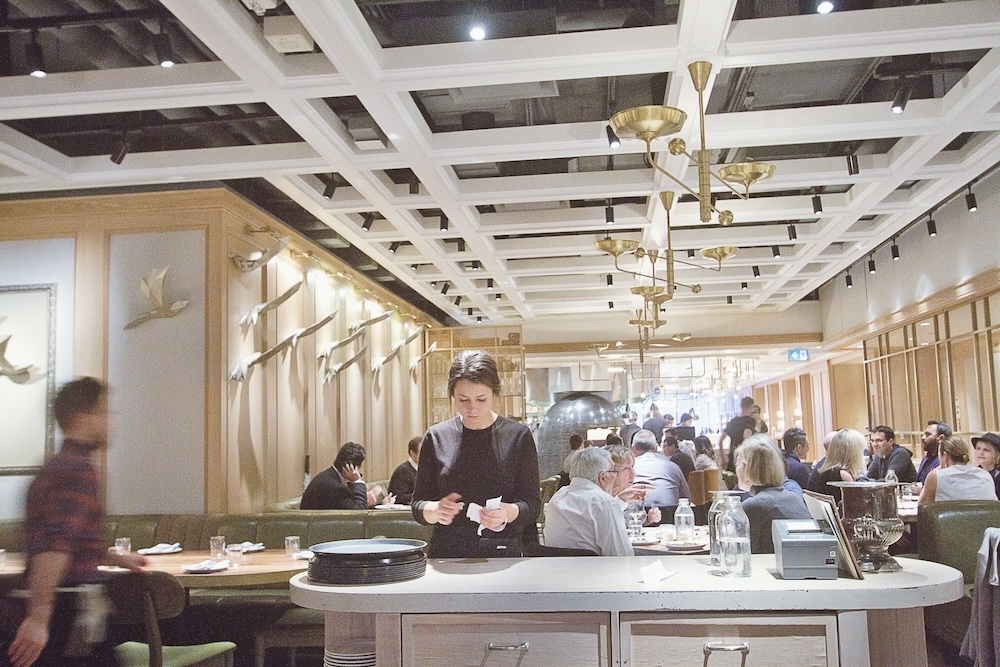
There’s a restaurant brand in Canada that you probably eat at. They have 23 locations spread across three provinces. Every location serves the same meal the same way. The guest at location one gets an identical experience to the guest at location 23.
Consistency isn’t luck. And it’s not because they hired better people than everyone else. It’s systems.
The Myth of People-Driven Consistency
 Most restaurant operators believe consistency comes from hiring. Train people well enough, and they’ll execute the brand consistently. This is half true. It’s also half wrong.
You can hire the best managers in Canada, put them in five different locations, and watch them diverge. One manager runs a tight food cost but slightly loose on portion control. Another runs perfect portions but labour creeps high. A third cuts corners on cleanliness to hit their numbers. They’re not bad managers. They just all have slightly different incentive structures, slightly different interpretations of the brand standard, and slightly different tools for executing it. Multiply that across 10 locations, and your brand isn’t consistent anymore. It’s a collection of variations.
Unified Recipes and Portion Standards
Every location uses the same recipe and portion standard, and that standard lives in a system—not in a binder that drifts over time. When corporate updates a recipe, it updates everywhere at once. There’s no “well, we’ve been doing it this way for three years” because the system is the source of truth, updated daily if needed.
Real-Time Cost Visibility by Location
Labour cost, food cost, waste—these aren’t mysteries that appear in a monthly report. They’re visible daily, by location, so when location three’s food cost starts creeping up, it’s caught on day two, not day 30. That’s not a monthly problem anymore. It’s an immediate feedback loop.
Standardized Workflows Across Locations
The opening checklist, the closing checklist, the inventory process, the labour scheduling guardrails—these are consistent across every location because they live in one system that every location uses. You’re not managing five different interpretations of “how we open.” You’re managing one process executed consistently everywhere.
Peer Visibility
Managers at location two can see how location six is performing on the same metrics. Not to create competition, but to create awareness. When one location is consistently running labour 2% better than the others, that manager’s practices can be studied and replicated. Consistency spreads by example, visible in real time.
Rapid Problem Identification
In a system with real-time data, inconsistencies are visible immediately. One location’s food cost is 28%, the other four are 26%. That’s a 2% gap that costs money—and it’s visible on day one. An operator can immediately ask: “What’s different here?” and fix it. Without that visibility, that 2% gap compounds for 30 days—$3,000 in extra food cost per location, per month.
The Scaling Problem That Systems Solve
Consistency gets harder as you scale. With three locations, one strong manager can enforce brand standards through force of personality. With 15 locations, personality doesn’t scale. Systems do. The best-run Canadian restaurant chains aren’t bigger because they’re smarter. They’re bigger because they’ve built systems that enforce consistency at scale. A new manager can walk into location 12, open the system, and know exactly how to execute the brand because the brand lives in the system, not in their head.
Consistency as Competitive Advantage
When your brand is consistently excellent across all locations, something shifts. Guests notice. They develop loyalty because they know what they’re getting. Managers get better because they’re executing a clear standard, not guessing at what the boss wants. Operations improve because you’re not solving the same problem five different ways.
The restaurants winning on consistency in Canada aren’t doing anything secret. They’re just refusing to let the brand drift. And they’re using systems to make that refusal stick, across every location, every day. That’s how you scale without sacrificing what made you great in the first place.